Home / Industry Solutions / SMT / PCBA Electronics Manufacturing / BGA / QFN Underfill
Underfill for BGA and QFN Assembly Protection
Capillary Fill · Package Reinforcement · Shock Resistance
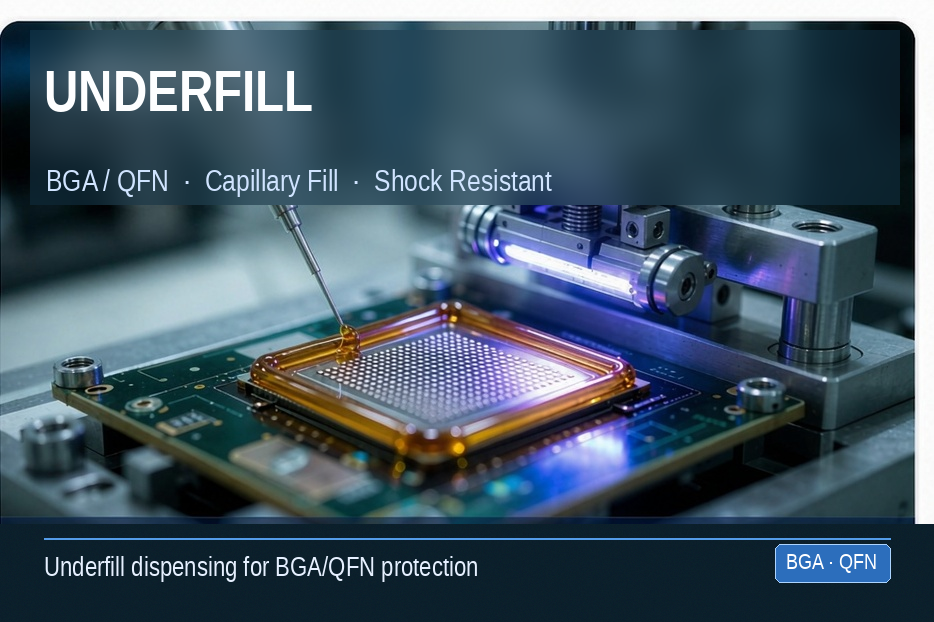
Underfill introduces a selected resin into the space between a mounted electronic package and its substrate. After curing, the material can help redistribute mechanical loads within the assembly. In SMT and PCBA manufacturing, a successful underfill process starts with package compatibility, controlled material flow and a validation plan that reflects the finished product’s operating conditions.
Capillary Fill: Understand the Flow Path
For capillary underfill, material is dispensed near the package edge and drawn into the gap by capillary action. Package stand-off, resin properties, surface condition and process temperature influence how the material flows. The dispensing pattern must allow the resin to advance without trapping excessive air.
A useful development trial observes fill time, material spreading and the resulting edge fillet. Do not assume that an apparently complete external fillet proves complete internal filling. Establish an appropriate verification method for internal coverage and voids using representative samples.
BGA and QFN Need Different Application Reviews
BGA packages and QFN packages differ in their underside geometry and solder connections. Underfill suitability should be checked with the package design, component guidance and assembly requirements. A process demonstrated on one package cannot simply be transferred to another package family.
For low-clearance assemblies, review access to the package edge and the available flow path carefully. Nearby components and keep-out zones can restrict dispensing. Confirm material compatibility with flux residues, solder mask and package surfaces, and consider the effect on rework before approving the process.
Reinforcement and Shock-Resistance Validation
Cured underfill can contribute to mechanical reinforcement, but shock resistance is a property of the complete assembly. Material stiffness, adhesion, cure behavior and thermal expansion must be considered alongside the board and package design. Increasing the amount of resin is not a substitute for selecting an appropriate material.
Define the relevant drop, shock, vibration or temperature-cycling tests for the product. Compare results against agreed acceptance criteria and monitor electrical function as required. Claims about reliability improvements should be supported by the actual package, material and process combination.
Control the Process From Dispensing to Cure
Develop the recipe using representative boards and the selected resin. Establish storage and preparation rules, dispensing amount, flow time and curing conditions. If preheating is used, verify the temperature at the assembly and confirm that the material’s working-time limits are respected.
During production, track material lot, recipe revision and relevant thermal settings. Inspect for unintended spreading and establish a defined response to interrupted cycles. Revalidate critical settings when package geometry, surface finish, resin or board construction changes.
What to Share With JCX
- BGA or QFN package drawing, stand-off and surrounding component layout
- Resin technical data, handling requirements and cure profile
- Internal-fill, fillet and void acceptance criteria
- Mechanical reliability targets, rework policy and production cycle time
Equipment to Evaluate
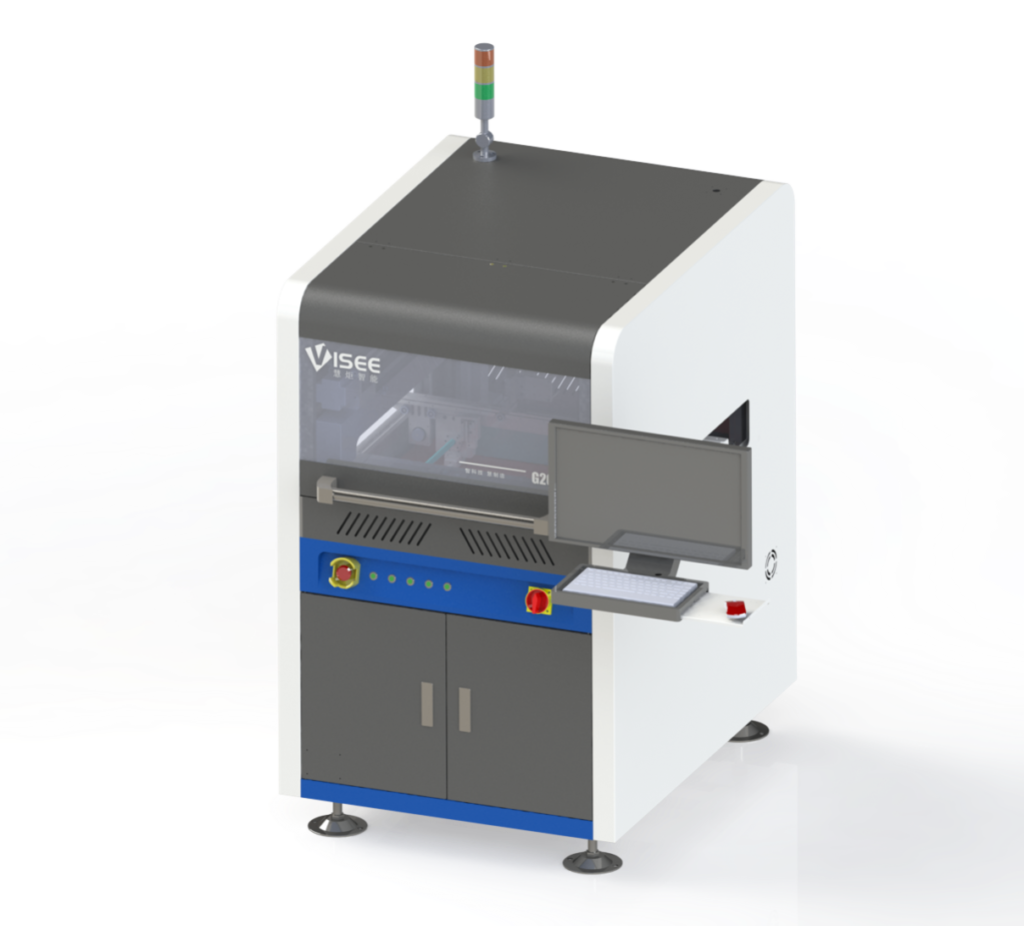
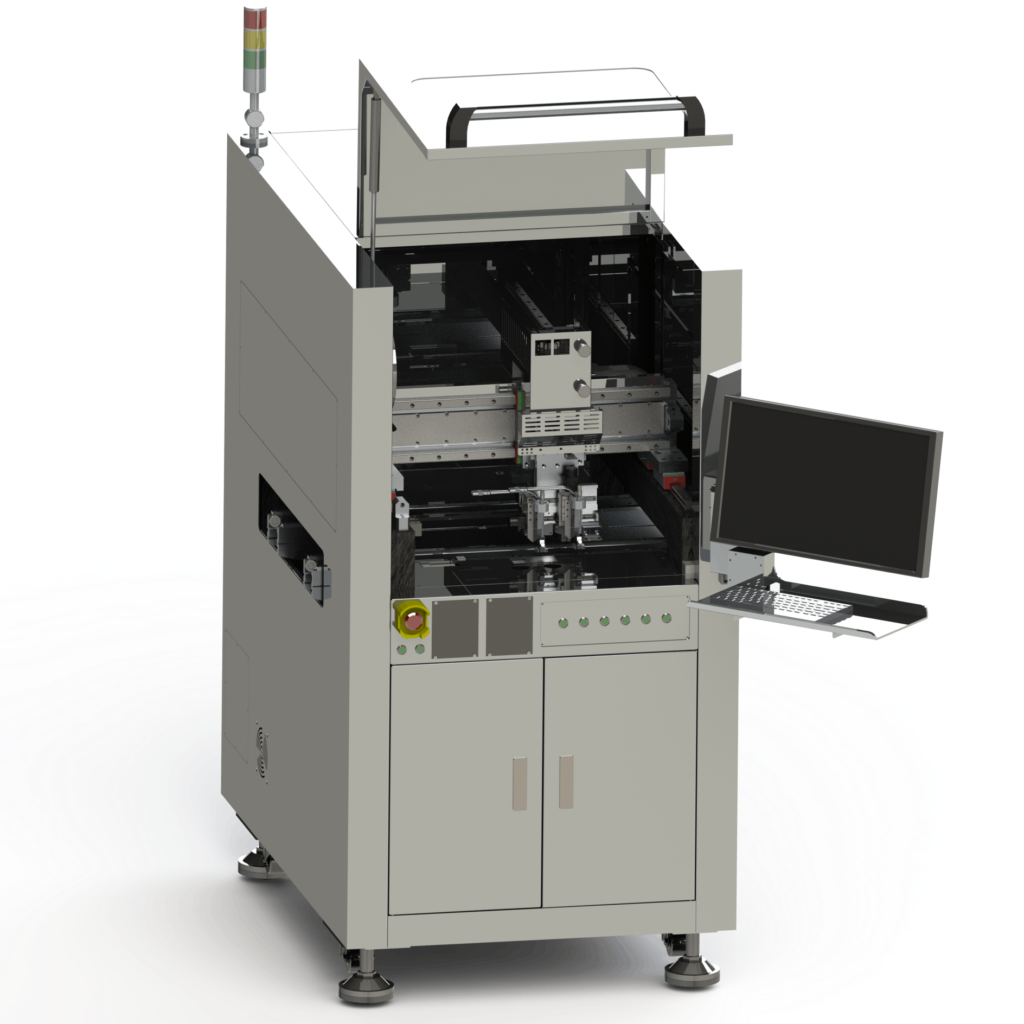
Use these configurations as starting points for an application review. Click a product card to read its specifications and options.
Confirm These Application Requirements
- Package dimensions, stand-off gap, surface finish and accessible dispense edges.
- Material viscosity, filler size, preheat, flow time and curing conditions.
- Define void-detection and reliability tests separately; surface imaging cannot prove complete hidden-gap fill.
Plan Your SMT / PCBA Application
Share your drawings, materials and acceptance requirements with JCX. We can review the proposed process and equipment configuration around your application.