Home / Industry Solutions / SMT / PCBA Electronics Manufacturing / FPC Precision Dispensing
FPC Dispensing: Reinforcement and Stiffener Fixation
Red Glue · Reinforcement · Anti-Shift
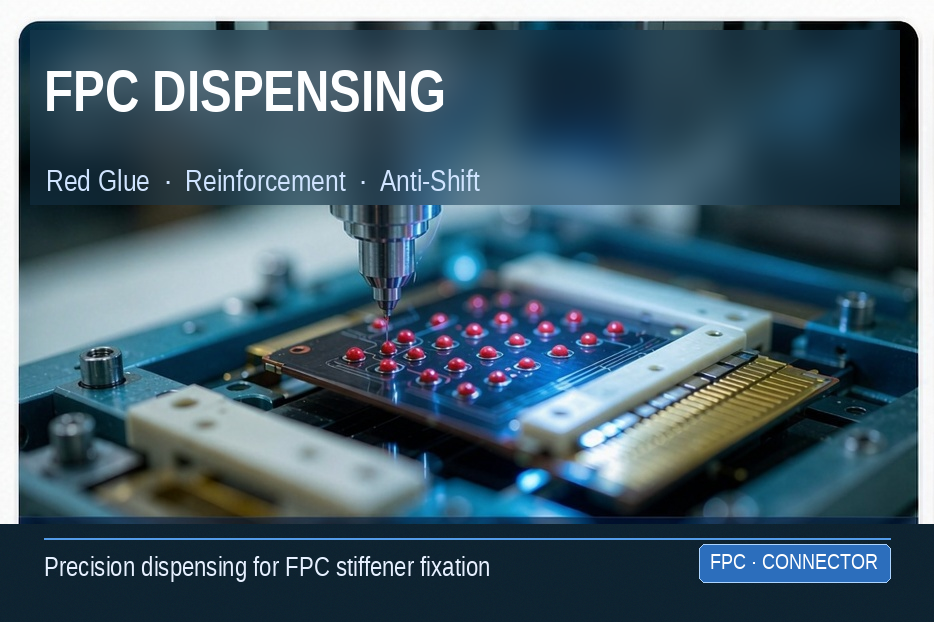
Flexible printed circuits (FPCs) connect compact electronic assemblies while accommodating space and movement. During manufacturing, their flexibility also makes stable support and accurate material placement important. Precision dispensing can support selected reinforcement and stiffener-bonding operations when the adhesive, fixture and cure are matched to the assembly design. The process should strengthen the intended area while preserving electrical contacts and required flexibility.
Red Glue: Select by Function, Not Color
Red glue is a common description for certain electronics assembly adhesives, but color alone does not define suitability. A surface-mount adhesive intended to retain components on a PCB should not automatically be treated as a stiffener-bonding material. Select the formulation against the actual FPC film, coverlay, reinforcement material and operating conditions.
Review the supplier’s technical data for surface preparation, storage, working life and cure. Establish whether the design needs temporary component retention, permanent structural reinforcement or attachment of a separate stiffener. Each function can require a different adhesive and process sequence.
Reinforcement Without Contaminating Gold Fingers
Reinforcement may be required near connectors or other mechanically loaded regions. Define the adhesive footprint, bond-line thickness and stiffener position on a controlled drawing. Gold fingers and connector mating surfaces should remain free of adhesive unless the approved product design explicitly specifies otherwise.
The fixture should support the flexible circuit without distorting it. Use locating features that remain stable during dispensing and placement, and check the effect of compression on material spreading. Inspect both the bonded region and its boundaries after assembly to confirm that material has not migrated into contact areas.
Anti-Shift Control Through Placement and Cure
Preventing movement involves more than choosing a dispensing pattern. The support fixture, adhesive tack, placement force and time before cure all affect part position. Plan how the FPC and stiffener will be held while the bond develops, especially where the assembly must retain a precise connector position.
Trials should compare deposited amount, pattern consistency and final alignment across representative parts. Verify curing conditions using the selected adhesive’s instructions. If heat is involved, confirm that the substrate and surrounding components tolerate the process without unacceptable distortion.
Release a Repeatable Production Recipe
Begin with sample FPC assemblies and a defined acceptance plan. Review adhesive coverage, contact-area cleanliness, stiffener alignment and the required bond-strength or flex-performance checks. Establish the inspection points before selecting a target cycle time.
Record the material batch, dispensing program and cure conditions. Define checks after nozzle replacement, fixture maintenance and product changeover. When the FPC construction or stiffener material changes, review the bonding process again rather than carrying over the previous recipe unchanged.
What to Share With JCX
- FPC and stiffener drawings, materials and locating features
- Marked gold-finger, connector and bend keep-out regions
- Adhesive data sheet, cure instructions and bond acceptance criteria
- Required throughput, inspection points and batch-tracking requirements
Equipment to Evaluate
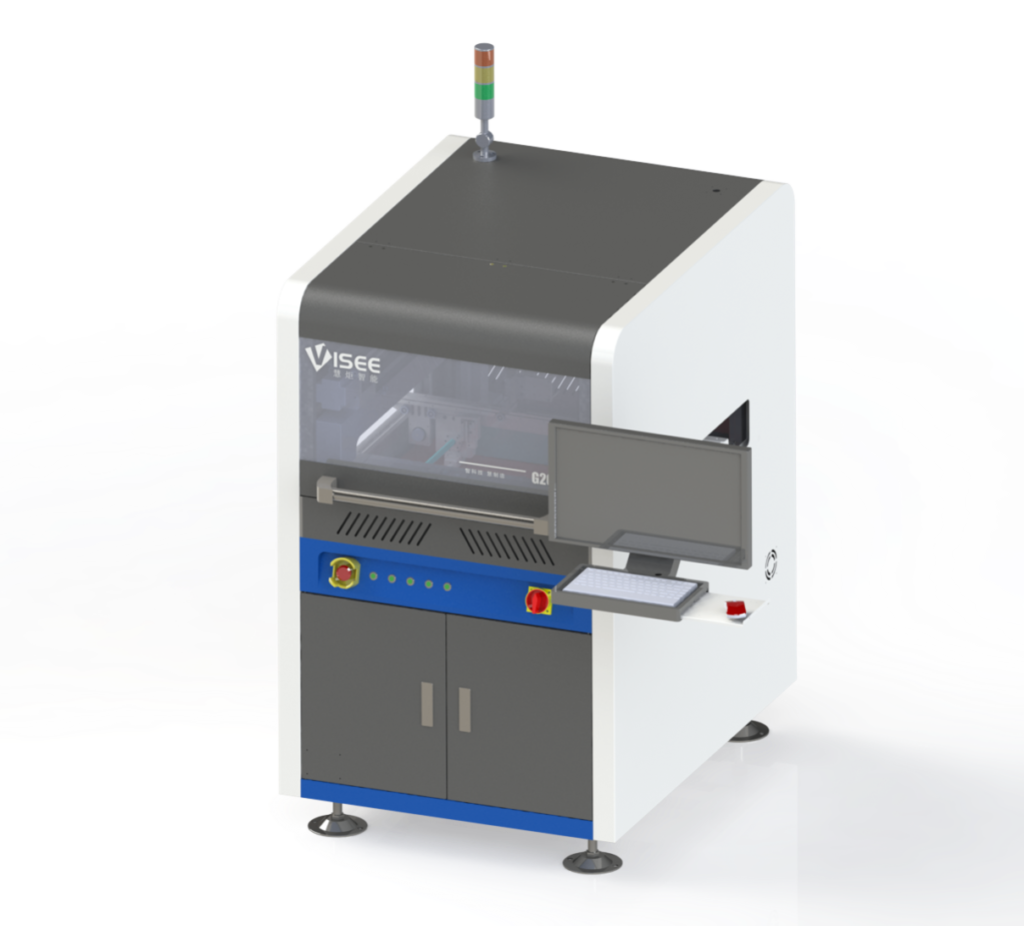
Use these configurations as starting points for an application review. Click a product card to read its specifications and options.
Confirm These Application Requirements
- FPC and stiffener drawings, support fixtures and bond-line requirements.
- Adhesive compatibility, deposit volume and component-position limits.
- Keep gold fingers and other electrical contact areas free of adhesive; validate placement and cure with samples.
Plan Your SMT / PCBA Application
Share your drawings, materials and acceptance requirements with JCX. We can review the proposed process and equipment configuration around your application.