Home / Industry Solutions / SMT / PCBA Electronics Manufacturing / Coating AOI + MES
Coating AOI & MES Traceability for PCBA
Coverage · Bubble Inspection · Traceability

Protective coating adds another process stage to PCB assembly, and its quality needs to be checked against clearly defined requirements. Coating inspection focuses on where material is present, where it should be absent and which visible defects require review. Connecting inspection results to a manufacturing execution system (MES) can make the history of each board easier to follow from application through final disposition.
Coverage Inspection and Keep-Out Regions
Start with a controlled drawing that identifies required coating regions and keep-out zones. The inspection recipe should assess both missing coverage and unwanted material on protected features, including specified contacts, connectors and test areas. Component height and optical access influence which regions can be observed.
The appropriate imaging method depends on the coating and inspection configuration. Fluorescence-based imaging may help assess coverage when the material supports it. A visible coating signal does not automatically demonstrate correct thickness, adhesion or cure; these properties need suitable verification methods where required.
Bubble Detection: Match the Method to the Defect
Bubbles and other discontinuities may indicate a problem in application, handling or curing. Define which defects are unacceptable, where they matter and the smallest features the inspection process must reliably detect. Validate the method using representative coated boards and known defects.
Coating-inspection systems differ from conventional solder-joint AOI. Detection of bubbles within transparent materials or measurement of coating thickness can require specialized technology. Confirm these capabilities for the selected configuration rather than assuming that any AOI machine can perform every coating check.
MES Traceability: Connect the Board and the Result
A traceability plan should link the board identifier to the coating recipe, material batch, inspection result and relevant production timestamps. Where required, retain defect images and review decisions so that production and quality teams can understand why a board was accepted, repaired or rejected.
Specify the actual data interface, field mapping and ownership during integration. Define how duplicate identifiers, reinspection and interrupted communications are handled. MES connectivity is a project-specific integration requirement; it should be tested with the intended equipment and factory system before release.
Close the Loop With Review and Reinspection
An inspection failure needs a defined disposition route. Assign responsibility for reviewing suspect regions, deciding on repair and confirming the result afterward. Preserve the original inspection record and connect subsequent checks to the same assembly history.
Use recurring defects to guide review of application patterns, material condition, handling and curing. Establish change control for coating materials and inspection thresholds. A practical workflow combines measurable acceptance criteria with clear responsibilities, so the stored data supports real production decisions.
What to Share With JCX
- Coating and keep-out drawings with acceptance criteria
- Material properties, inspection stage and required defect sensitivity
- Board identification method and MES interface requirements
- Repair workflow, image retention and reinspection rules
Equipment to Evaluate
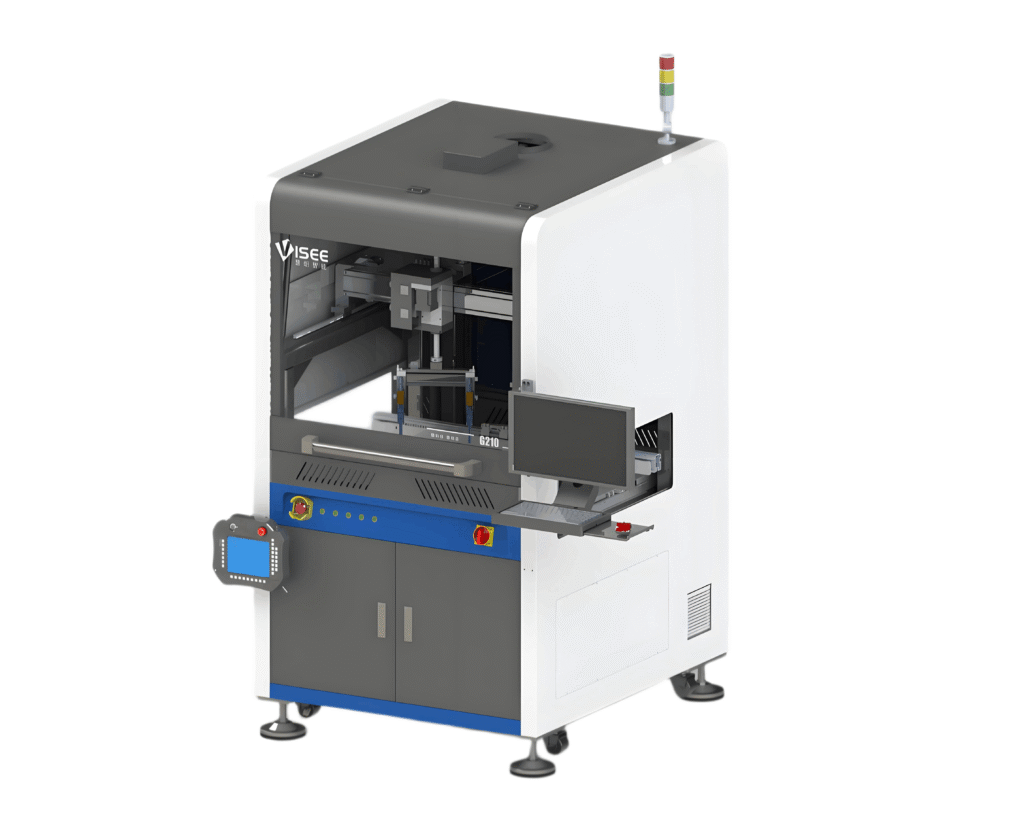
Use these configurations as starting points for an application review. Click a product card to read its specifications and options.
Confirm These Application Requirements
- G210-F3 offers a documented coating presence/absence inspection option to discuss.
- Coverage, bubbles, thickness and keep-out contamination require separately agreed detection methods and thresholds.
- MES record format, board identification, image storage and reinspection workflow must be defined; they are not assumed standard deliverables.
Plan Your SMT / PCBA Application
Share your drawings, materials and acceptance requirements with JCX. We can review the proposed process and equipment configuration around your application.