Home / Industry Solutions / Automotive Electronics / Selective Coating
Selective Coating for Automotive PCB Protection
Keep-Out Zones · Corrosion Protection

Automotive electronics can encounter humidity, contamination and changing temperatures. Selective conformal coating applies a protective material to specified areas of a circuit board while leaving designated regions uncoated. A successful process combines the correct coating material with board preparation, a controlled application pattern and a verified cure. The goal is a repeatable protective layer that fits the electrical and mechanical design.
Define Keep-Out Zones Before Programming
Keep-out zones (KOZ) identify areas where coating is not permitted, such as certain connectors, test contacts or mating surfaces. They should be specified on a controlled drawing, with a clear reference for the board’s position. The dispensing or spray path can then be planned around both coated areas and protected boundaries.
The image includes the notation ±0.02 mm KOZ. Treat this as a project-specific precision requirement to review, not a verified coating-edge accuracy for every machine or material. Machine positioning, board location, valve response, fluid spreading and curing behavior all contribute to the final boundary. Confirm the achievable result through trials using the actual assembly and coating.
Corrosion Protection Depends on the Full Process
A suitable conformal coating can help limit exposure of electronic surfaces to moisture and contaminants. Its effectiveness depends on the selected chemistry, surface condition, coverage, film thickness and cure, as well as the environment in which the board will operate. Coating should not be described as making every assembly waterproof or universally corrosion-proof.
Establish cleaning and handling requirements before coating. Residues, contamination and poor wetting can undermine the intended protective layer. Review coverage around component edges and difficult geometries, then validate the coated assembly against the customer’s specified environmental test plan.
Match the Application Method to the Board
The board layout may call for a combination of narrow-path dispensing and broader-area coating. Select the application approach using the material data, component clearances, protected zones and production volume. Plan board support and access so that component height and fixture geometry do not obstruct the intended path.
During trials, review coating continuity, excessive accumulation, bubbles and encroachment into protected regions. Define the inspection method before release. Fluorescent inspection may assist coverage review when the selected coating supports it, but additional checks may be needed for thickness, cure or adhesion.
Control Cure, Changeover and Traceability
Use the material supplier’s instructions to establish the curing process, and verify the completed result on representative boards. Cure requirements can differ substantially between coating chemistries. Equipment settings alone do not demonstrate that a film has reached the intended condition.
Record the material lot, recipe revision and relevant application and curing settings. Establish cleaning and maintenance routines for the delivery system, and specify what must be checked after a changeover. Combining these controls with a clear defect-review process helps keep the coating operation consistent as production evolves.
What to Share With JCX
- PCB layout, component heights and a marked coating/keep-out drawing
- Coating technical data, viscosity range and curing requirements
- Coverage, thickness and boundary acceptance criteria
- Required throughput, environmental tests and production-record requirements
Equipment to Evaluate
Use these configurations as starting points for an application review. Click a product card to read its specifications and options.
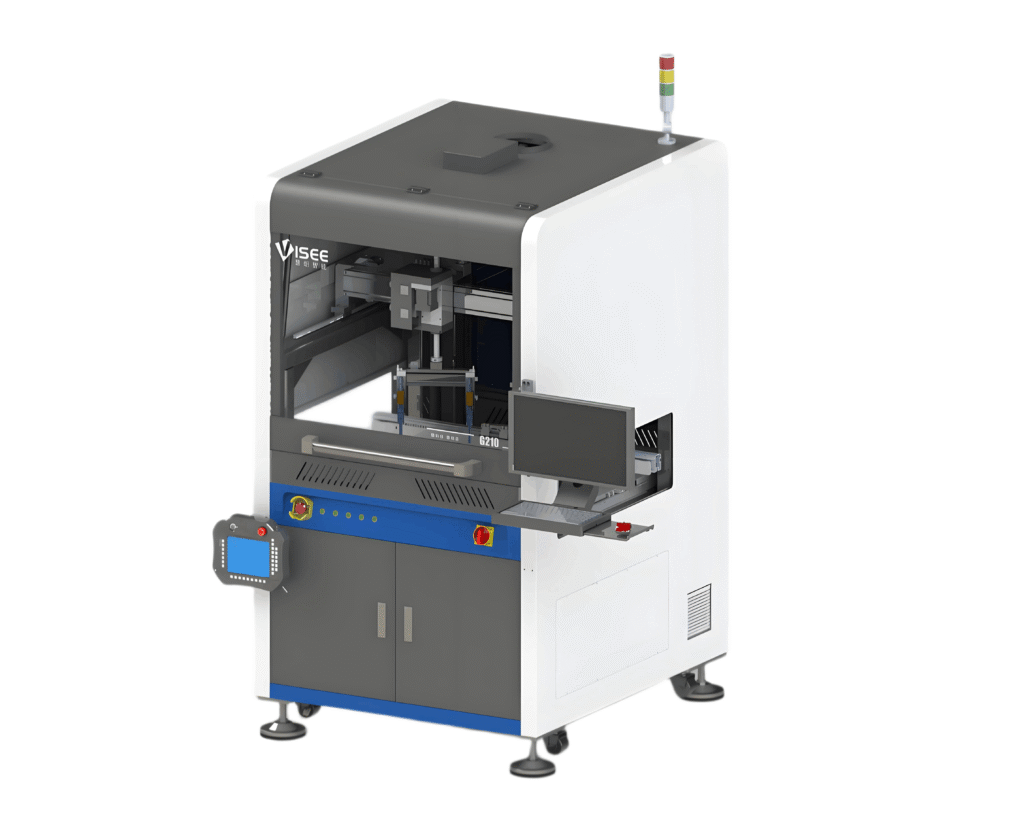
Confirm These Application Requirements
- Board drawing with connectors, test points and other keep-out areas marked.
- Coating data sheet, thickness targets, coverage and curing conditions.
- Required valve arrangement, board clearance and inspection scope; the applicable F3 variant must be identified.
Plan Your Automotive Application
Share your drawings, materials and acceptance requirements with JCX. We can review the proposed process and equipment configuration around your application.